Dealing with Bulky Waste in Harold Hill Moves
Posted on 06/05/2026
Dealing with Bulky Waste in Harold Hill Moves: A Practical Guide for Safer, Smarter Clearances
If you are moving house, flat, or office in Harold Hill, bulky waste can become the thing that throws the whole day off. Old wardrobes, broken bed frames, tired sofas, white goods, mattresses, and awkward garden items all have a habit of showing up at the worst possible moment. Dealing with bulky waste in Harold Hill moves is not just about "getting rid of stuff"; it is about planning the move properly, staying safe, keeping costs under control, and avoiding that last-minute scramble when the van is already waiting outside.
Truth be told, bulky items are often the slowest part of a move. They block hallways, catch on corners, and can turn a straightforward removal into a bigger job than expected. This guide explains how to handle them sensibly, what options are usually available, what to avoid, and how to make the process feel much less chaotic. You will also find practical links to useful moving resources throughout, including decluttering before relocating, furniture removals in Harold Hill, and recycling and sustainability.
Why Dealing with Bulky Waste in Harold Hill Moves Matters
Bulky waste matters because it affects almost every part of a move. A heavy sofa in the front room, a cracked wardrobe in the spare bedroom, or an old fridge in the kitchen does more than occupy space. It changes the pace of packing, adds physical risk, and can make access routes awkward for everyone involved. In a busy move, one oversized item can be the difference between a calm handover and a frazzled afternoon with the front door wedged open and someone muttering, "How did this feel smaller before?"
There is also a local practicality to think about. Harold Hill properties vary a lot, from flats with tighter access to family homes with long hallways, shared entrances, or stair-heavy layouts. That means bulky waste planning needs to be sensible and specific, not generic. If you are moving a full house, you may want to combine waste clearance with house removals in Harold Hill or a more flexible man and van service so the day runs in one clean sequence rather than in two or three stressful stages.
There is a financial side too. If you move unnecessary bulky items, you may end up paying to transport, store, or dispose of things you do not really want. That is money and time tied up in clutter. A proper plan helps you decide what is worth keeping, what should be sold or donated, and what needs to go. It sounds obvious, but many people only realise this when they are already halfway through loading the van.
Key point: bulky waste is not just "extra rubbish". It is a logistics issue, a safety issue, and often a cost issue as well.
How Dealing with Bulky Waste in Harold Hill Moves Works
In practice, dealing with bulky waste during a move follows a simple sequence: assess, sort, separate, remove, and dispose responsibly. The trick is doing those steps early enough to avoid last-minute pressure. A tidy plan is always easier than a heroic rescue effort on moving day. Always.
Start with a room-by-room review. Look at anything that will be hard to lift, awkward to carry, or too large for a normal bin collection. That usually includes sofas, wardrobes, desks, bed bases, mattresses, appliances, shelving units, patio furniture, and oversized storage items. If an item is damaged beyond easy repair, bulky waste removal may be the most practical route. If it is still in good condition, you might sell, donate, or reuse it instead.
Next, decide whether each item is moving, storing, recycling, or disposing. This is where a little structure helps. For example, furniture you want to keep but cannot fit into the new place may be better handled through storage in Harold Hill. Items you definitely do not want can be grouped for waste clearance. And items with value may be better separated from waste altogether so they do not get accidentally bundled into the wrong pile.
Then comes the practical removal stage. Some bulky items can be dismantled, which makes them easier to carry and more efficient to load. Bed frames, flat-pack shelving, and certain wardrobes often come apart with basic tools. Larger or delicate items may need careful handling, padding, and two-person lifting. If you are already juggling packing, it can make sense to combine the work with packing and boxes in Harold Hill so the whole move feels more joined-up.
Finally, disposal should be handled responsibly. That usually means choosing a route that separates reusable, recyclable, and waste-only items. A quick dump into the van is rarely the best answer, even if it feels convenient in the moment.
Key Benefits and Practical Advantages
Handling bulky waste properly during a move brings benefits that are easy to underestimate until you actually experience them. The biggest one is space. When oversized items are removed early, rooms feel calmer, packing gets easier, and moving crews can work without constantly shifting things out of the way. That alone can save a surprising amount of time.
Safety is another major advantage. Heavy waste can cause strains, scrapes, and awkward trips, especially on stairs or in narrow hallways. A less obvious benefit is protecting the items you are keeping. One badly placed old table or lopsided wardrobe can easily damage walls, doors, mirrors, or freshly packed boxes if it topples or catches during the move.
There is also a mental benefit. Many people find that once the bulky waste is gone, the move stops feeling like an endless pile of decisions. You can see progress. The place starts to look like a home that is on its way out, not a storage cave with a postcode. That shift matters more than people admit.
- Less physical strain: fewer awkward lifts and fewer risky manoeuvres.
- Faster loading: the van space is used more efficiently.
- Cleaner exit: the property is easier to leave tidy.
- Better organisation: keep, donate, sell, recycle, and dispose are clearly separated.
- Lower stress: fewer surprises on moving day.
If you are trying to reduce the load before the big day, the article on getting organised and decluttering before relocating is a smart companion read. It pairs well with the broader advice in expert tips for a stress-free house moving journey.
Who This Is For and When It Makes Sense
This guide is for anyone moving in Harold Hill who has large items to shift, clear, store, or dispose of. That includes homeowners, tenants, landlords, students, small businesses, and anyone dealing with a partial clear-out after a long tenancy or a renovation. If you are looking at a sofa that will not fit through the door without a lot of effort, this is for you. If you are looking at three old desks, a mattress, and a washing machine and thinking, "Right, where on earth do I start?", this is definitely for you.
It makes sense to plan bulky waste handling early if any of the following apply:
- You are moving from a flat with awkward access or stairs.
- You have furniture that is damaged, outdated, or no longer wanted.
- You are downsizing and do not have room for everything.
- You are moving on a tight schedule and need to reduce load fast.
- You want to avoid paying to transport items twice.
- You need to combine removals with disposal or storage.
It is especially useful for people moving into smaller accommodation, shared housing, or student lets. In those cases, bulky items often need more planning than the move itself. The student removals in Harold Hill page is worth a look if you are working with a tighter budget and a tighter staircase. Yes, both are usually involved.
Step-by-Step Guidance
Here is a practical way to manage bulky waste without letting it take over the whole move. It is straightforward, but the order matters.
- Walk through the property early. Check every room, loft, shed, garage, and hallway for large items.
- Mark each item as keep, sell, donate, store, or dispose. Do not leave anything in the vague "maybe" pile for too long.
- Measure awkward items and access points. Doorways, stair corners, lifts, and van space all matter.
- Dismantle what you can safely dismantle. Remove legs, shelves, doors, and loose parts where appropriate.
- Separate reusable items from true waste. This avoids accidental disposal of items that still have value.
- Protect floors, walls, and corners. Use blankets, cardboard, or moving pads if items are being carried out.
- Book the right transport or clearance support. Choose a service that matches the size and weight of what you have.
- Load in the right order. Heavy and sturdy items should usually go in first, with fragile or awkward pieces secured carefully.
- Do a final sweep. Check cupboards, behind doors, under beds, and in outdoor areas.
One small but useful detail: keep screws, brackets, and fittings in labelled bags taped to the item they belong to. Sounds basic, but it saves a lot of head-scratching later. We have all been there, opening a box of random bolts and wondering whether any of them belong to the wardrobe, the bed, or something entirely unknown.
For heavier pieces, it can help to read heavy lifting hacks for going solo. Even if you are not lifting alone, the advice is useful for understanding balance, grip, and what should probably be left to a professional team.
Expert Tips for Better Results
There are a few simple habits that make bulky waste handling much smoother. First, do not leave it to the final day. Bulky items always take longer than you think, particularly in older properties where access is not ideal. Second, sort by effort, not just by type. A broken bedside cabinet might be easier to remove than a full wardrobe, even though both are technically furniture. Third, think in terms of routes and corners, not just weight.
Here are the practical details people often miss:
- Measure the item and the route out. A sofa that fits in the room may still fail at the staircase turn.
- Use two people for large awkward items. Not because it sounds nice, but because it is safer.
- Empty drawers and cupboards first. Hidden weight is a common reason items become harder to move than expected.
- Remove loose glass or mirrors. These should be packed separately.
- Keep pathways clear. One small box in the wrong place can slow the whole chain of movement.
- Plan for weather. A wet morning, a narrow path, and a heavy mattress are not a fun combination.
If bulky furniture is being stored rather than removed immediately, it is worth using the guidance in how to preserve your sofa for extended storage and efficient methods for moving your bed and mattress. Those articles are especially handy if you are trying to keep furniture in decent shape for a second home or a short-term hold.
And if you are moving a fragile or specialist item alongside your waste clearance, the advice on protecting your piano with professional moving services shows the level of care that delicate heavyweight items really need. A piano is obviously its own beast, but the general principle applies: weight alone is not the only risk.
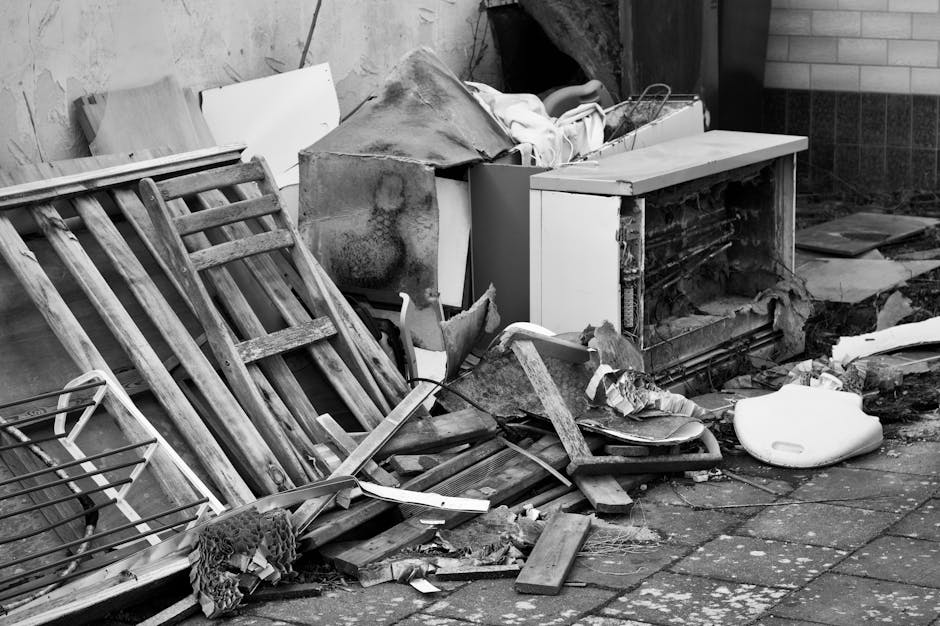
Common Mistakes to Avoid
Most bulky waste problems come from a handful of avoidable mistakes. The first is underestimating how long the clear-out will take. People often think, "That wardrobe will take ten minutes," and then spend forty minutes looking for the right screwdriver, a second pair of hands, and a place to put the dismantled panels.
The second mistake is mixing waste with items you still want to keep. Once a room becomes a mixed pile of cables, cushions, screws, books, and old chairs, things get lost very quickly. Keep categories separate from the start. It is boring, yes, but boring is good here.
Another common issue is ignoring access constraints. Narrow doorways, tight corners, shared stairwells, parking restrictions, and neighbour access all matter. If you are moving from a flat or upper floor, plan with more care. In that situation, the support offered by flat removals in Harold Hill or removal services in Harold Hill may be much more practical than trying to improvise on the day.
- Do not assume every bulky item can be carried as-is.
- Do not leave disposal decisions until the van is already being loaded.
- Do not overload bags or boxes with hidden heavy parts.
- Do not forget protective gloves, straps, or basic tools.
- Do not place all trust in "we'll manage somehow" - that phrase is responsible for many sore backs.
Tools, Resources and Recommendations
You do not need a warehouse full of gear to deal with bulky waste properly, but a few basic tools make a big difference. A set of screwdrivers, an adjustable spanner, heavy-duty gloves, tape, marker pens, furniture blankets, and strong bags for loose fittings are all useful. If you are dismantling beds or shelving, keep an eye on the instructions or at least photograph the item before taking it apart. A quick phone photo can save a lot of confusion later.
For movement and loading, the right vehicle matters too. Depending on the size of the job, a removal van in Harold Hill or a smaller, flexible man with a van in Harold Hill can be a practical fit. The same is true for mixed jobs where you are not just moving homes but also clearing out old furniture and household waste at the same time.
It is also sensible to use the website's supporting pages when you want to understand how the wider service works. The services overview, pricing and quotes, and about us pages are useful places to start if you are comparing options and deciding how much help you actually need.
Practical summary: the best bulky waste plan is the one that reduces handling, separates keepers from waste, and uses the right transport at the right time. Simple, but not always easy. Do it early and the rest of the move feels much lighter.
Law, Compliance, Standards, or Best Practice
When dealing with bulky waste, the safest approach is to follow responsible waste-handling practices and make sure items are removed, transported, and disposed of appropriately. In the UK, people are generally expected to avoid fly-tipping, keep waste from being left in places where it could obstruct others, and use suitable disposal routes for large items. If you are unsure whether something should be reused, recycled, or treated as waste, err on the side of caution and separate it clearly.
Best practice usually means using a service that handles items carefully, avoids unnecessary damage, and works with recycling wherever possible. That is especially relevant for furniture, appliances, and items that still have salvage value. Responsible clearance is not just about getting rid of things quickly. It is also about avoiding avoidable harm, keeping the property safe, and treating materials in a sensible way.
If your move involves risky lifting or awkward objects, the guidance in health and safety policy and insurance and safety gives a useful sense of the standards you should expect from a careful provider. That matters more than people sometimes realise. A cheap shortcut is not a bargain if it leaves you with damaged walls, injured backs, or a disposal mess to sort out later.
For environmentally conscious moves, the information on recycling and sustainability is a good companion because it reinforces the idea that bulky waste should be handled with reuse and recycling in mind where possible.
Options, Methods, or Comparison Table
There is no single "best" way to handle bulky waste in a move. The right choice depends on the item, the time you have, and whether you are keeping, selling, storing, or disposing of it. Here is a simple comparison to help you think it through.
| Option | Best for | Pros | Watch-outs |
|---|---|---|---|
| Keep and move it | Furniture or appliances you still need | Saves replacement cost, keeps familiar items | Requires space, labour, and careful handling |
| Store it temporarily | Items you want but cannot place immediately | Flexible, helps with downsizing or staggered moves | Extra cost and a second handling stage |
| Sell or donate it | Items in usable condition | Reduces waste, may recover value | Needs time, photos, and coordination |
| Recycle or dispose | Broken, unsafe, or unwanted bulky items | Clears space quickly, simplifies the move | Must be done properly and responsibly |
| Professional removal support | Heavy, awkward, or time-sensitive jobs | Safer, faster, less stress | Needs planning and a clear brief |
For a lot of Harold Hill moves, the most sensible solution is a mix of methods. A wardrobe might be moved, a broken chair recycled, a mattress replaced, and a spare desk stored for later. That mixed approach is often the calmest one, to be fair.
Case Study or Real-World Example
Imagine a family moving from a three-bedroom house in Harold Hill to a smaller property nearby. They have a dining table, two wardrobes, a sofa that will not fit through the new hallway without dismantling, an old mattress, and a chest freezer they no longer need. At first glance, it sounds like a normal removal. In reality, it is half move, half clear-out.
The family starts early, sorts each item, and books support that matches the job. The dining table goes with the move because it still has value. One wardrobe is dismantled and kept. The second wardrobe is damaged, so it is removed as bulky waste. The sofa is checked against the new room size and kept only after measuring the access route. The mattress is replaced rather than transported. The freezer is emptied, disconnected in good time, and handled separately. If they had left all of this to moving day, the van would have been cramped and the whole process slower.
What made the difference was not luck. It was sequencing. They did not try to solve everything at the kerbside with a bit of hope and a strong cup of tea. They decided what was worth saving, what needed storing, and what should be cleared. That simple discipline cut down on handling, reduced waste, and made the move feel far more controlled. A small thing, really, but the kind of small thing that changes a day.
For a similar planning mindset, the article on your moving day checklist is genuinely useful because it helps you think beyond the furniture and into the whole exit process.
Practical Checklist
Use this checklist in the days leading up to the move. It is simple, but it keeps your head clear when everything else starts getting noisy.
- Walk through every room and note all bulky items.
- Separate keep, sell, donate, store, and dispose piles.
- Measure large items and the route out of the property.
- Take photos of items before dismantling them.
- Gather tools, tape, labels, and gloves.
- Remove loose contents from cupboards, drawers, and shelves.
- Check whether anything needs professional handling.
- Plan where items will go at the new property, or into storage.
- Protect floors, corners, and door frames during removal.
- Confirm vehicle space and timing before the move day arrives.
- Do a final room check before leaving.
If you know the move will involve more than simple lifting, a fuller plan around same-day removals in Harold Hill can be useful when timing is tight and bulky items need to move out quickly. It is not always the answer, but it can be the difference between a smooth handover and a headache.
Conclusion
Dealing with bulky waste in Harold Hill moves becomes much easier once you stop treating it as an afterthought. The big win is planning: decide early what stays, what goes, what can be stored, and what should be handled separately. That one habit saves time, reduces stress, and makes the whole move feel more under control.
Whether you are clearing a sofa, a bed frame, a fridge, or several rooms of mixed household clutter, the same principle applies. Measure properly, sort honestly, move carefully, and choose the right support for the job. The result is usually a safer move, a cleaner finish, and a lot less of that last-minute panic that nobody enjoys.
Get a free quote today and see how much you can save.
And if the day feels a bit much, that is normal. Start with one room, one item, one decision. The rest usually follows.