Gooshays Drive removals Harold Hill guide for tight access
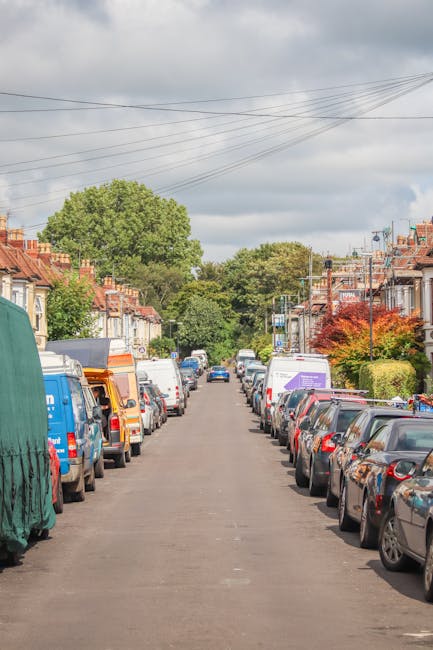
If you are planning a move on or around Gooshays Drive, you already know the tricky part is not always the packing. It is the access. Narrow approaches, parked cars, awkward turning space, shared entrances, stairs, and the usual Harold Hill realities can turn a simple removal into a slow, stop-start day. This Gooshays Drive removals Harold Hill guide for tight access is here to help you plan properly, avoid the usual headaches, and make the move feel much more manageable.
In practice, the difference between a smooth move and a stressful one often comes down to preparation. A van that is too large, a loading point that has not been thought through, or a missed detail about who can park where can add time, cost, and a lot of frustration. The good news? Tight access moves can be handled well. You just need a sensible plan, the right vehicle choice, and a moving team that understands local conditions. Let's get into it.
Why Gooshays Drive removals Harold Hill guide for tight access Matters
Gooshays Drive removals are a good example of why local knowledge matters. On paper, a house move looks straightforward: arrive, load, drive away, unload. In reality, access can change everything. If the vehicle cannot get near the front door, every item has to be carried further. If the road is narrow or busy at the wrong moment, timing matters. If there is no easy place to stop, the whole rhythm of the day changes.
That matters because removals are already physical, time-sensitive work. Tight access adds extra steps, and extra steps mean extra handling. More handling can mean more protection is needed for furniture, more time on site, and more chances for small delays to stack up. A sofa that would normally glide from hall to van can suddenly need a careful pivot, a second pair of hands, and a bit of patience. Truth be told, that is where many moves go wrong: not because anyone did something dramatic, but because the small details were left too late.
In Harold Hill, you also have to think about the everyday stuff people forget. Can a van stop safely without blocking neighbours? Is the pavement wide enough for carrying? Are there low branches, tight bends, or shared access points? Is there a school run, bin day, or morning traffic pattern that will make the street feel busier than expected? These are the questions that save time later.
If you are comparing options, it helps to look at the broader service pages too. For general move planning, home moves and removals explain the standard approach, while man and van is often useful for smaller or more flexible jobs. For a closer look at moving equipment and vehicle choice, moving van and removal van are also worth a look.
How Gooshays Drive removals Harold Hill guide for tight access Works
At its simplest, a tight-access removal is a move that needs a more careful approach because the vehicle cannot park right beside the property, or cannot stay there for long. The process usually begins with an access check. That means looking at the street, the entrance, the route from property to vehicle, and the size of the furniture being moved. A good team will ask for photos, a pin location, or even a short video walk-through. Not fancy. Just useful.
Once access is understood, the removal plan can be matched to the property. A smaller vehicle may be better than a larger one if the road space is limited. Sometimes a man and van removals setup is more practical than a bigger truck. Other times, a larger loading area is fine as long as the team can stage the move carefully and work in smaller runs. The point is not to force the biggest vehicle onto the street. It is to choose the most efficient one for the job.
On the day, the team typically wants to reduce back-and-forth. They will protect floors, dismantle furniture where needed, and create a clear path from the property to the loading point. If access is especially awkward, they may organise the load in a different order so the most awkward items come out at the best time. That sounds small, but it often makes the difference between controlled progress and a chaotic shuffle.
A moving day in a tight street also depends on communication. If the driver needs to pause, reverse, or reposition, that needs to be done calmly and safely. No rushed manoeuvres. No guessing. If a parking spot opens up, great. If it doesn't, the plan should still work. That is the whole point of prep.
Key Benefits and Practical Advantages
A well-planned tight-access move brings more benefits than people expect. First, it reduces handling time. If the route from door to van is clear and the access plan is realistic, the team spends less time carrying heavy items unnecessarily far. That usually means less fatigue and fewer delays. Small win, but a real one.
Second, it helps protect your belongings. When movers are not rushed by poor access, they can take their time around corners, steps, and narrow hallways. That matters for wardrobes, glass furniture, beds, mirrors, and anything with awkward weight distribution. In a tight space, one wrong angle can make a simple lift feel like a wrestling match. We have all seen that sort of moment, and nobody enjoys it.
Third, it can help control cost. Tight access does not always mean expensive, but poor planning can add avoidable labour time. If the vehicle choice is right and parking is thought through early, the move is often more efficient. For anyone comparing quotes, the pricing information on pricing and quotes is a useful starting point.
There is also a confidence benefit. Once you know the team understands the access challenge, the stress level usually drops. You stop worrying about whether the van will fit, whether the front path is wide enough, or whether the sofa will make the turn. That peace of mind is not fluffy. It keeps the day moving.
| Approach | Best for | Strengths | Watch-outs |
|---|---|---|---|
| Small van | Narrow streets, limited parking, quick jobs | Easier to position, more flexible turning | May need more trips if load is large |
| Larger removal vehicle | Big loads with workable street access | Fewer trips, better for bulky items | Harder to park or manoeuvre in tight areas |
| Man and van removals | Smaller homes, light furniture, mixed access | Flexible, practical, often quicker to organise | Not always ideal for full-house moves |
| Full removal service | Larger properties, full household relocations | More capacity, more structured handling | Needs more access planning before the move |
Who This Is For and When It Makes Sense
This guide is for anyone moving from a property where access is not easy. That could be a terraced house with a narrow frontage, a flat with shared parking, a home on a road where vans have to stop a little further away, or a place where stairs and internal corners make furniture handling more delicate. If any of that sounds familiar, you are in the right place.
It also makes sense if you are moving a single bulky item rather than a whole household. A wardrobe, sofa, fridge, or bed base can be more awkward than a pile of smaller boxes. Strange, but true. The odd-shaped thing is often the one that causes the most hassle. In those cases, furniture pick up can be a useful option to consider.
Businesses can benefit too. Office relocations in tighter access spots are rarely about huge distances; they are about timing, loading bays, building access, and keeping disruption low. If that sounds like your situation, have a look at office removals and office relocation services. The principles are the same, just a little more formal and usually a bit more time-sensitive.
And if you are not sure whether your job is small or full-scale, that is fine. Many people only realise the access issue once they stand outside and look at the kerb properly. Happens all the time.
Step-by-Step Guidance
Here is a straightforward way to plan a tight-access removal on Gooshays Drive without overcomplicating it.
- Walk the access route first. Start at the front door and think like a mover. Where will the biggest item turn? Which gate opens fully? Is there a step, slope, or a tight corner that needs extra care?
- Measure the awkward items. You do not need engineering precision. Just the rough size of sofas, beds, wardrobes, appliances, and anything that will not easily tilt or fold.
- Check parking and stopping space. If the vehicle cannot wait directly outside, work out the closest safe point. A few extra metres is usually manageable; a long carry changes the plan quite a bit.
- Share photos before moving day. A few clear pictures of the frontage, hallway, stairs, and parking area can help the team choose the right vehicle and loading method.
- Decide what needs dismantling. Beds, tables, and some wardrobes are often easier to move in parts. This is where packing and unpacking services can also support a cleaner, less rushed move.
- Prepare the home itself. Clear hallways, protect loose items, and keep paths open. One stray umbrella stand can create more trouble than you would think.
- Load in the right order. The team should start with the heaviest, safest items and build the load logically, so nothing is crushed or left sitting awkwardly at the back.
- Leave a buffer in the schedule. Tight access often takes longer than a roomy driveway move. Give it space. That is the honest advice.
If you are moving a whole home, house removals or house movers may be the better fit. For smaller jobs, man with van or removal services might be more than enough.
Expert Tips for Better Results
One of the best things you can do is keep the access briefing short and honest. Don't say "it should be fine" if you are not sure. Say what you actually know. If the van will need to park 30 metres away, say so. If there is only one place to stop, say that too. Clear information makes better planning. Simple, really.
Another useful tip is to avoid loading the day with other jobs. A move with tight access needs concentration. If the van arrives and the street is already blocked with deliveries, the timing gets messy fast. Try to book a slot that gives you room to breathe, especially if the weather is not helping. A damp pavement and a narrow carry route can make everything feel ten times longer.
Use the right team size for the job. For some tight-access moves, one or two movers are enough. For others, you need more hands so items can be carried steadily without stopping every few steps. More people is not always better, but too few hands can be exhausting. There is a balance there, and experience matters.
Finally, protect the route before you protect the van. It sounds backwards, but it is not. A clean hallway, floor covers, and clear stair access do more to keep your furniture safe than fancy loading tricks. If the house itself is difficult to move through, the careful stuff has to start there.
Expert summary: For tight-access removals, the winning formula is usually simple: measure honestly, park realistically, choose the right vehicle, and keep the route clear. That combination solves most of the stress before it starts.
Common Mistakes to Avoid
The biggest mistake is underestimating the access. People often plan the packing in detail and leave the parking question until the morning of the move. That is backwards. If the vehicle cannot get close enough, even well-packed boxes become awkward to handle. It is one of those tiny decisions that turns into a big issue later.
Another common problem is forgetting to check the inside route. Everyone looks at the street, but then the hallway has a sharp turn, the stairwell narrows, or a railing blocks the easiest path. The van might be fine. The house might not be. Both need checking.
Do not overload boxes either. In a tight-access move, heavy boxes are harder to carry through narrow gaps and up steps. A box that is too heavy feels manageable in a straight hallway, then suddenly becomes a problem at the first awkward turn. To be fair, that is where many sore backs begin.
And please do not assume someone else has sorted the parking. If a permit, local restriction, or neighbour arrangement is needed, confirm it early. A move can stall for something as boring as a forgotten gap in the parking plan. Boring, yes. Expensive, also yes.
Tools, Resources and Recommendations
You do not need specialist kit to plan well, but a few simple tools make life easier. A tape measure helps with furniture dimensions. A phone camera helps with access photos. A note app helps keep track of which pieces need dismantling. And a basic floor plan sketch can be surprisingly useful if the property layout is awkward.
For support and planning, the most useful website pages are often the practical ones. If you want to understand service scope, removals near me gives a local starting point, while movers is handy when you want a broader view of what can be handled. If you are comparing vehicle types, moving truck and removal truck hire are useful to compare against a smaller van-based setup.
For more general trust and service information, you may also find about us, health and safety policy, and insurance and safety reassuring. They help you understand how the business approaches care, handling, and responsibility.
Law, Compliance, Standards, or Best Practice
For a move like this, the main compliance concerns are usually safety and lawful parking or stopping, not complicated legal technicalities. You should always follow local parking restrictions, avoid blocking access routes, and make sure loading is done safely. If there are permits, building rules, or site-specific instructions, those need to be followed too. It sounds obvious, but you would be surprised how often people leave it to chance.
Good practice in the removals trade also means appropriate lifting, sensible load distribution, secure vehicle loading, and clear communication between the team and the customer. These are not just box-ticking habits. They reduce the chance of damage and injury. In a tight-access setting, those basics matter even more because space for error is limited.
If you are comparing providers, it is worth looking at whether they publish clear policies and terms. Pages such as terms and conditions, payment and security, and privacy policy may not be exciting reading, but they are useful signs of a business that handles details properly. You do not need a legal textbook. You just need confidence that the process is clear.
If recycling or disposal comes into the move, ask how unwanted items are handled. recycling and sustainability is relevant here, especially if furniture or packaging needs responsible handling after the move.
Options, Methods, or Comparison Table
Choosing the right removal method comes down to access, load size, and how much hands-on help you need. Here is a simple comparison to help you decide without getting lost in jargon.
| Method | Best when | Typical fit | Why people choose it |
|---|---|---|---|
| Man and van | The job is smaller, access is awkward, or timing is flexible | Flat moves, partial loads, a few bulky items | Simple, adaptable, usually less complex to arrange |
| House removals | You are moving most or all of a home | Full household moves | More structured and better for bigger inventories |
| Removal company | You want a more complete moving service | Busy families, larger homes, time-sensitive schedules | Useful when organisation and coordination matter most |
| Moving van / removal van | Access is tight but the load still needs decent capacity | Medium-sized moves | Balances manoeuvrability and carrying space |
If your street is especially awkward, a smaller vehicle can save more time than a larger one. That surprises people sometimes. Bigger is not always better. It sounds neat on paper, but the road does not care about neat.
Case Study or Real-World Example
Here is a realistic example based on the kind of move this guide is meant for. A couple living in a terrace near Gooshays Drive needed to move from a first-floor property with a narrow stairwell and limited front access. There was no space for a large van to sit directly outside for long, and one side of the road was regularly busy with parked cars.
Instead of treating it like a standard house move, the team planned it around access. The couple sent photos of the frontage, hallway, stairs, and their biggest items. The wardrobe was dismantled in advance, the bed frame was separated, and the load order was planned so the heavier items came out first while the van was in the clearest position. A smaller vehicle was used rather than forcing a bigger one into the street.
The result was not flashy. It was just calm. The team carried in manageable runs, the couple knew what was happening, and there was no last-minute panic about whether the vehicle would be blocked in. It still took effort, of course. Moves always do. But the day felt organised, and that is what most people want in the end.
That kind of planning is also why some customers prefer a man with a van style service for certain Harold Hill moves, especially where access matters more than volume. For bigger homes, the planning principle stays the same; only the scale changes.
Practical Checklist
Use this checklist before moving day. It is simple, but it catches the details people usually miss.
- Measure the biggest furniture items.
- Check the front access, gate width, hallway turns, and stair corners.
- Confirm where the vehicle can safely stop.
- Take photos of the entrance, street, and any awkward route points.
- Decide which furniture needs dismantling.
- Pack heavy items into smaller, safer boxes.
- Keep hallways and exits clear.
- Set aside essentials for the first night.
- Check whether parking or loading restrictions apply.
- Let the removals team know about any unusually tight turns or steps.
If you have a lot of loose ends, do not worry. Most moves have them. The point is to catch the obvious ones early, so the day itself can stay focused.
Get a free quote today and see how much you can save.
Conclusion
Gooshays Drive removals in Harold Hill are very manageable when the access is planned properly. Tight streets, awkward parking, and narrow routes do not have to derail the move. They just mean the job needs a more thoughtful setup than average. Once the route, vehicle size, load order, and timing are all considered, the whole day becomes much more predictable.
If you remember only one thing from this guide, make it this: access is part of the move, not an afterthought. Measure it, picture it, and talk about it early. That one habit can save a lot of stress, and probably a few grey hairs too. And honestly, on moving day, that is a pretty decent win.
Take your time, plan the small stuff, and the rest usually falls into place.
Frequently Asked Questions
What makes Gooshays Drive removals in Harold Hill tricky?
The main challenge is usually access rather than distance. Narrow parking, limited stopping space, tight turns, or a long carry from the van to the property can all slow the move down if they are not planned for.
Should I choose a small van for tight access?
Often, yes. A smaller van is usually easier to position on narrow roads and in awkward parking spots. That said, the right choice depends on the amount of furniture and how much space the vehicle actually needs to load safely.
How do I know if my property has tight access?
If a large van would struggle to park outside, if there are narrow hallways, steps, or a tight entrance path, then access is likely to be limited. A quick photo set or short video can help confirm it.
Can a man and van service handle a full house move?
Sometimes, but not always. It depends on the size of the property, the amount of furniture, and the time available. For smaller homes or partial loads, it can work very well. For larger moves, a fuller removals setup may be more efficient.
What should I send to the removals team before moving day?
Send photos of the frontage, hallway, stairs, parking area, and any awkward furniture. A list of the biggest items is also useful. The more honest the detail, the better the plan.
Do tight-access moves cost more?
Not always, but they can if the access adds time or extra handling. Good planning helps keep costs under control. That is one reason it is smart to get a clear quote early through pricing and quotes.
What if the van cannot park right outside?
That is common enough. A good team will plan for a short carry or choose a more suitable vehicle. The key is to know this before moving day, not discover it at the kerb.
Should I dismantle furniture before the move?
If items are large, awkward, or likely to struggle through narrow spaces, dismantling can make the move much easier. Beds and some wardrobes are the usual candidates.
Is parking permission needed for Gooshays Drive removals?
That depends on the exact location and local restrictions. If there are parking controls or loading limits, they should be checked in advance. It is better to confirm than to assume.
What is the safest way to move heavy items through tight spaces?
Clear the route, use enough people, protect floors and walls, and move slowly. Heavy items should be carried with control rather than speed. Straight lines are your friend; sharp turns are the enemy.
How early should I book a tight-access removal?
As early as you can, especially if your move is on a busy day or you need extra planning time. That gives room for access checks, vehicle choice, and any special arrangements.
Where can I check your company policies before booking?
Useful pages include about us, health and safety policy, insurance and safety, and terms and conditions. They help you understand how the service is run and what to expect.
What if I only need help moving one or two bulky items?
That is a common situation, and it often suits a flexible removal option rather than a full house move. Pages like furniture pick up and removal services may be more relevant than a larger household package.